Henry and Grace’s final conversation
Our Chemical HeartsHenry and Grace’s final conversation turns a lingering, undefined romance into a separation neither character can mistake for a temporary misunderstanding. Grace explains why she had sought Henry’s company while still bound to Dominic Sawyer’s memory; Henry understands that the relief he gave her did not make him the central love of her life. Their last exchange contains tenderness, but its decisive movement is toward an ending: Grace gives him her work for the newspaper, they kiss, and she leaves while he remains unable to speak.
Setting and the reason for the meeting
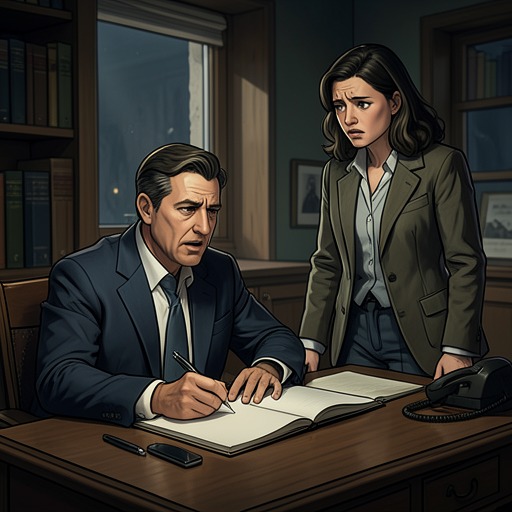
The conversation takes place on the seat where Henry and Grace had waited the afternoon Alistair Hink called them to his office. Its return to that shared location gives the scene a quiet symmetry: the place associated with their beginnings becomes the setting for their final talk. Grace motions Henry to sit beside her and says she has something to give him. He refuses at first, telling her he cannot continue the relationship, and she agrees that this is the end.
What Grace gives him is a small envelope addressed for the editor’s consideration. The envelope connects their private relationship to the Westland Post, where they first began speaking. Grace acknowledges that Henry had previously asked why she changed her mind about the newspaper and that she had not answered him. Now, at their last meeting, she offers the explanation she had withheld. The submission is therefore both a practical piece of work and the occasion for a final account of what Henry meant to her.
Grace’s account of grief and relief
Grace describes the period after Dominic’s death as a time when she expected grief to lessen. She knew that time and new memories could gradually put distance between a person and a tragedy, and she waited for her memories of happier days with Dominic and the sudden waves of misery to become easier to bear. Instead, the pain persisted. She came to understand that she had not wanted it to fade: carrying Dominic’s memory heavily felt deserved, and she also took on some of his parents’ grief when it seemed too great for them.
Her account clarifies that her continued mourning was not simply an involuntary burden. Grace had made the pain part of an imagined obligation to Dominic, a debt she believed she owed him. This helps explain the force of the earlier signs that his presence remained with her: in Dominic’s room, Henry had seen the objects that preserved his life there, and recognized that Grace had kept his clothes and bedding unwashed. Later, at the abandoned station, she released keepsakes from a small metal box into the water, including an anchor necklace, a Strokes keychain, and a Ramones shirt. The final conversation does not erase those acts or turn remembrance into forgetting; it reveals the self-punishing belief that had given them their emotional weight.
Grace then explains what changed when she met Henry. During their first afternoon talking, she went twenty minutes without thinking about Dominic, a personal record. That brief interval left her feeling lighter, and she slept for four hours without waking. She attributes both changes to Henry and says that, when she was with him, the grief receded. The revelation gives their connection real significance: Henry was not merely pursuing someone unavailable, and Grace did experience their time together as relief. Yet relief was not the same as release from the debt she had imposed on herself, or proof that she was ready to build a life with him.
Tenderness without a future together
Henry answers that the relief she describes is still not enough. Grace moves closer and touches his cheek before kissing him. When he asks why she kisses him as if she loves him, she replies that this is the only way she knows how. Henry understands the answer through her history with Dominic, who had been her first and only everything before him. The kiss is genuine tenderness, but it does not settle the question of what their relationship can become.
That distinction produces the scene’s sharpest reversal. Henry had been able to imagine himself as Grace’s second choice, a place he thought he might accept. Now he sees himself as a brief supporting presence in a love story that remains organized around Grace and Dominic. His recognition is not that Grace’s feelings for him were false; it is that those feelings do not make him the story’s central partner. The difference between being loved in a moment and being chosen for a shared future becomes the emotional fact he can no longer avoid.
Henry also recognizes how much of Grace he never learned. He had been eager to ask about her childhood, her mother, and what she wanted for the future, but had not actually asked. This admission complicates the idealized image he had built around her: he has loved a version of Grace while knowing far less about her life than he imagined. He considers the romantic possibility that she might return someday, but looking at her, he understands that this imagined reunion will not happen. The scene breaks not only his hope of keeping her, but also the fantasy that the relationship could eventually resolve according to the romantic pattern he wanted.
Departure and aftermath
Grace waits for Henry to answer. He remains silent, exhausted by the sense that the same things have been said repeatedly without changing their situation. She exhales, then smiles broadly, a sudden moment of warmth that makes her beauty more painful to him rather than less. She calls him an extraordinary collection of atoms and laughs quietly; the smile fades, and she leaves. Henry watches her go and understands that he has loved many possible versions of Grace, not a single person he could claim or fully know.
The envelope carries the conversation forward into Henry’s next practical act: he gives it to Lola Leung and calls it his redemption. In the remaining semester, Grace gradually stops occupying his thoughts with the same force. A week later, she is no longer the first thing he thinks of on waking, and he recognizes that he will survive the breakup. The novel’s later account of Grace’s recovery offers a parallel but distinct outcome. After Christmas, her limp becomes less noticeable, she stops using her cane, and she begins driving to school. She sometimes wears an item of Dominic’s clothing, but mostly returns to wearing her own. The change suggests that she can remember him without continuing to treat pain as payment.
Their separation is also made practical: Henry and Grace remove each other from social media, and they transfer Ricky Martin Knupps II to Ryan, who renames him Fish Fish. The connections that had tied their everyday lives together gradually end. Henry still remembers Grace at particular moments, including New Year’s Eve and mornings when she is absent, but he no longer mistakes that continuing ache for evidence that they will reunite. Their final conversation leaves both attachments intact—Grace’s enduring love for Dominic and Henry’s love for Grace—while making clear that neither attachment can supply the future the other person wanted.